

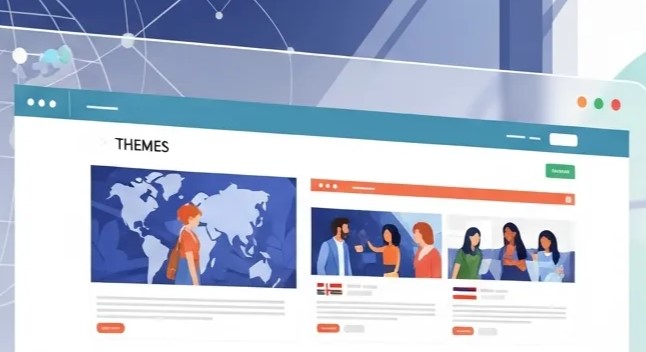
The term multilingual website themes refers to site templates built with language flexibility at their core, allowing content translation, layout adjustments, and compatibility with international SEO standards. From optimizing metadata to configuring language menus, every aspect of a multilingual website theme’s strategy must be deliberate and user-centric. As internet usage continues to grow worldwide, embracing a multilingual approach is vital for maintaining relevance and competitiveness this year.
Currently, over half of global web traffic originates from non-English speakers, underscoring the importance of designing sites that cater to multiple language preferences. A well-executed multilingual website theme solution can reduce bounce rates, increase session durations, and position a site higher in regional search results. Through the sections that follow, we offer actionable best practices, technical tips, and performance considerations to help you launch dynamic multilingual websites that resonate today.
Why Multilingual Website Themes Matter
Global connectivity has surged, and language is a primary factor shaping user experience. Multilingual website themes offer visitors the ability to browse content in their native language, which not only shows cultural respect but also improves clarity and usability. According to data from USA.gov, more than 350 languages are spoken in the U.S. alone, highlighting the need for inclusive web design. Furthermore, research by UNESCO suggests that language access promotes educational and economic development, reinforcing the case for multilingual strategies.
When a site presents localized content, engagement metrics typically improve: users spend more time exploring pages, bounce rates decline, and conversion funnels become more efficient. Beyond user behavior, multilingual website themes also have a direct impact on search engine optimization. Search platforms interpret each language version as a unique entity, so properly structured language directories and hreflang annotations can boost visibility in local search results.
Consistent branding is another critical benefit. Multilingual themes ensure that design elements—such as typography, color schemes, and imagery—remain uniform across versions while adapting text direction and spacing for various scripts. This cohesion strengthens brand identity and fosters familiarity among international audiences. In today’s competitive online environment, delivering a seamless, language-appropriate experience is a differentiator that drives loyalty and encourages repeat visits.
Finally, embracing a multilingual approach demonstrates corporate social responsibility. By respecting linguistic diversity, companies signal inclusivity and accessibility. As regulations around digital accessibility tighten this year, offering translated content and accessible navigation is not only a user-centric choice but also a compliance consideration for global operations.
Planning for Effective Localization

Successful multilingual website themes begin with thorough planning. Start by analyzing audience demographics and traffic sources through analytics tools to identify priority markets. Develop a content matrix that lists every page and interface element requiring translation—from global navigation menus to blog posts and product descriptions. Prioritizing high-impact pages ensures that critical touchpoints receive attention first.
Consider cultural nuances when localizing content. Date and time formats, numerical separators, currency symbols, and legal disclaimers vary significantly between regions. Collaborate with native linguists or reputable translation agencies to capture idiomatic expressions and tone. While machine translation can accelerate initial drafts, relying solely on automated tools risks inaccuracies and awkward phrasing, especially for marketing copy and legal text.
Right-to-left (RTL) scripts and extended character sets pose additional considerations. Map out design variations early to allocate sufficient space for longer text strings in languages like German or French, and flip interface elements when supporting RTL languages such as Arabic or Hebrew. Creating a centralized style guide and glossary helps maintain consistency in terminology, voice, and formatting across all locales.
Building a localization roadmap with clear milestones and responsibilities is vital. Integrate translation milestones into your product backlog or editorial calendar to ensure steady progress. Use project management software to track status, set review deadlines, and manage feedback loops. This structured approach minimizes bottlenecks and supports on-time releases of new language versions.
Designing Language-Adaptable User Interfaces
A flexible design system is the backbone of any multilingual website themes implementation. Leverage CSS custom properties to adjust typography, spacing, and color schemes dynamically based on the selected language. Employ fluid grid layouts that expand or contract according to text length, preventing overflow or excessive whitespace.
Choose font stacks with broad character support to accommodate accented Latin scripts, Cyrillic, and non-Latin glyphs. Web-safe fonts like Noto Sans or Roboto are popular options because they cover multiple scripts without sacrificing performance. Ensure that line heights, letter spacing, and paragraph margins adapt automatically when switching between languages to preserve readability.
Image and iconography also require attention. Replace locale-specific imagery—for example, hand gestures or cultural symbols—to avoid misinterpretation. Use scalable vector graphics (SVGs) for icons to maintain crisp rendering across resolutions and allow for color adjustments if needed.
Implement a prominent language switcher in the header or footer, using clear language labels rather than flag icons alone. Supplement visual controls with accessible alternatives: enable keyboard navigation, provide ARIA labels, and offer screen reader announcements when the language changes. Consistent placement and intuitive controls reduce friction and guide users toward their preferred version seamlessly.
Technical Implementation Strategies

Depending on your platform, there are multiple paths to roll out multilingual website themes. On traditional CMS platforms like WordPress or Drupal, plugins such as WPML, Polylang, or Locale contribute translation management, database storage, and template adjustments out of the box. Configure each language as a distinct site instance or subdirectory (/en/, /fr/, /es/) to simplify URL structures and caching.
For headless CMS or static site generators like Gatsby and Next.js, integrate i18n libraries such as react-i18next or next-i18next. Store localization keys in JSON or YAML files and load only the relevant bundle at runtime to optimize performance. Implement internationalized routing that respects language codes in the URL, and programmatic redirects that detect browser language preferences.
In dynamic applications, expose language parameters in API endpoints so that menus, page content, metadata, and image alt attributes load according to the selected locale. Use content delivery networks (CDNs) with edge caching to serve localized assets from servers closest to end users, reducing latency and improving Core Web Vitals scores.
Embed automated testing in your CI/CD pipeline. Validate that translated templates compile correctly, run spell checks on language files, and deploy only after passing localization linting tools. A well-orchestrated release process that ties translation updates to code merges ensures consistency and reduces manual errors.
SEO, Performance, and Quality Assurance
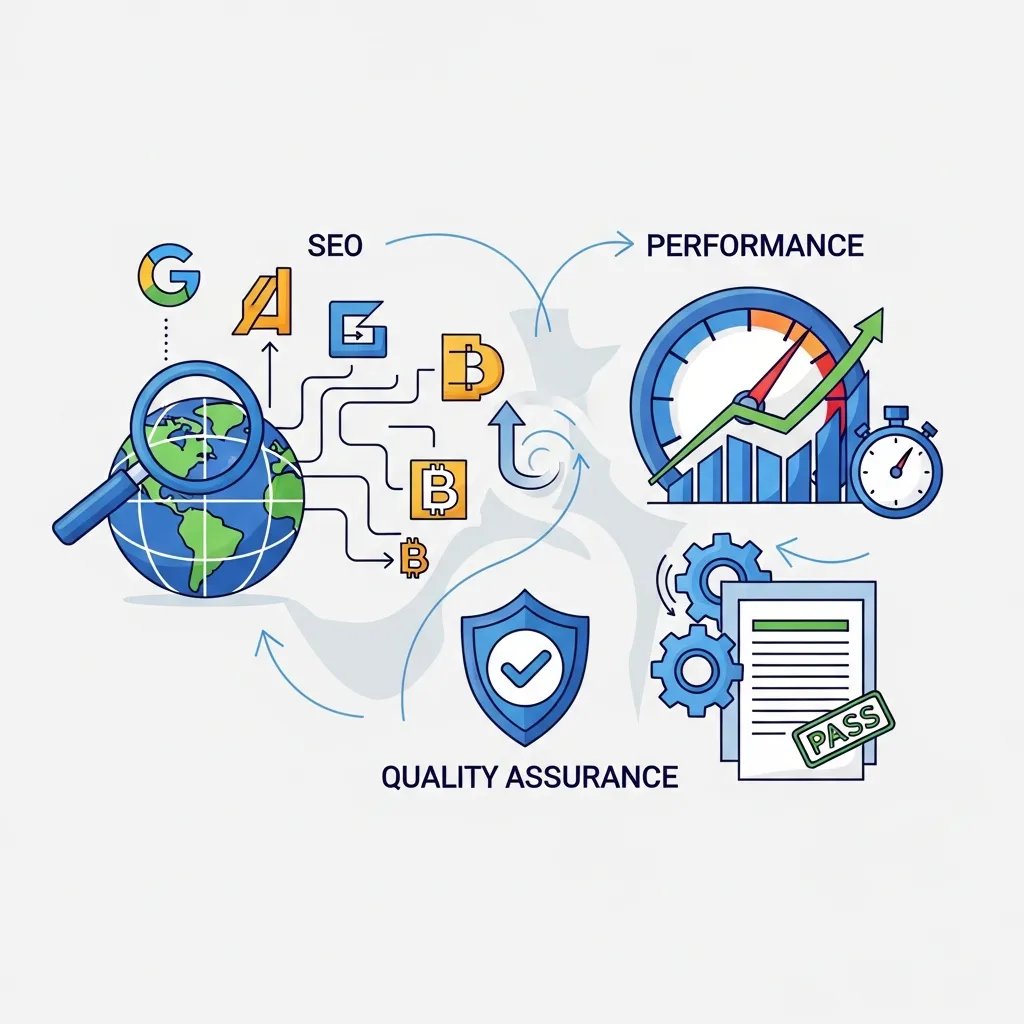
Search engines treat each language variant of your site as a distinct entity. Implement hreflang tags in the head of each page to signal language and regional targeting, using formats like hreflang='en-US' and hreflang='fr-FR'. Provide unique metadata—page titles, meta descriptions, and open graph tags—for each locale to avoid duplicate content penalties and improve click-through rates.
Optimize URL structures for clarity, for example, /en/about-us/ and /de/uber-uns/. Compress images, minify scripts, and lazy-load assets to maintain fast load times across regions. Monitor Core Web Vitals metrics for each language version and address issues such as large layout shifts or long server response times.
Rigorous testing is essential. Conduct linguistic QA with native speakers to verify translation accuracy, tone, and context. Run functional tests on language switchers, redirects, and navigation links to ensure seamless behavior. Leverage automated accessibility tools such as Lighthouse and axe to confirm compliance with WCAG standards across all languages.
Finally, analyze user metrics by locale to uncover areas for improvement. Track bounce rates, average session durations, and conversion rates in each language directory. Use A/B testing to refine translated CTAs and landing pages. A continuous feedback loop between analytics insights and localization updates drives ongoing optimization.
Conclusion
Building multilingual website themes is a strategic investment that unlocks access to global audiences and drives sustainable growth. By planning effectively, designing adaptable interfaces, implementing robust technical workflows, and adhering to SEO and performance best practices, you can deliver personalized experiences that resonate across languages and cultures. In today’s interconnected world, a thoughtful multilingual approach not only enhances user satisfaction but also strengthens brand credibility and search visibility.
As you embark on your multilingual journey this year, leverage structured content matrices, collaborate with professional linguists, and integrate localization into your development and release cycles. Through continuous testing and data-driven refinements, your multilingual website themes will evolve to meet the needs of diverse audiences, helping you expand your reach and achieve meaningful engagement in every market.
Frequently Asked Questions
What are multilingual website themes?
Multiple website themes are specially designed templates that allow websites to support multiple languages seamlessly. These multilingual website themes help businesses reach global audiences by offering content in different languages without compromising design or functionality.
Why should I use multilingual website themes?
Using multiple website themes helps expand your audience, improve user experience, and boost international SEO. Businesses targeting global markets benefit greatly from multilingual website themes as they make content accessible to users in their native language.
How do multilingual website themes improve SEO?
Multiple website themes enhance SEO by enabling proper language targeting, hreflang tags, and localized content. These features help search engines understand your site structure, making multilingual website themes essential for international visibility.
Are multilingual website themes compatible with all CMS platforms?
Most multiple website themes are compatible with popular CMS platforms like WordPress, Shopify, and Joomla. However, it’s important to check compatibility with translation plugins when selecting multilingual website themes.
What features should I look for in multilingual website themes?
When choosing multiple website themes, look for features like translation support, RTL compatibility, SEO optimization, and responsive design. High-quality multilingual website themes also integrate easily with translation tools.
Can I use plugins with multilingual website themes?
Yes, multiple website themes often work with plugins like WPML, Polylang, or Weglot. These plugins enhance the functionality of multilingual website themes by simplifying translation management.
Are website themes mobile-friendly?
Most modern multilingual website themes are designed to be fully responsive. This ensures that your multilingual website themes provide a smooth experience across all devices, including smartphones and tablets.
Do multilingual website themes support RTL languages?
Many multilingual website themes support right-to-left (RTL) languages like Arabic and Hebrew. This feature ensures that multilingual website themes are accessible to a wider global audience.
How easy is it to customize multiple website themes?
Multilingual website themes are usually highly customizable, allowing you to adjust layouts, colors, and typography. Customization options make multilingual website themes suitable for various industries and branding needs.
Are multilingual website themes expensive?
The cost of website themes varies depending on features and quality. While some free options exist, premium multilingual website themes often provide better support, updates, and advanced functionality.
Can multilingual website themes handle large content websites?
Yes, well-built website themes can handle large websites with multiple languages. They are optimized for performance, making multilingual website themes suitable for content-heavy platforms.
How do website themes affect website speed?
High-quality multilingual website themes are optimized for speed, but adding multiple languages can slightly impact performance. Choosing lightweight multilingual website themes helps maintain fast loading times.
Are website themes secure?
Security depends on the theme developer and updates. Trusted multilingual website themes are regularly updated and follow best practices, ensuring your website remains safe and secure.
Can e-commerce sites use website themes?
Yes, multilingual website themes are ideal for eCommerce websites. They allow online stores to display products in multiple languages, making multilingual website themes perfect for global selling.
How do I choose the best website themes?
To choose the best multilingual website themes, consider your business goals, target audience, and technical requirements. Reading reviews and testing demos can help you find the most suitable multilingual website themes.

Mary McElwee is an editor at ThemeOrbis, specializing in creating and refining content around WordPress themes, web design, and digital creativity. She simplifies complex design and development concepts into clear, practical insights that help users build modern, responsive, and high-performing websites with ease.










No Comments